

LASIK Co-Management: Before and After Your Surgery
Our optometrist provides guidance to patients considering laser vision correction, including information on surgical evaluations and pre- and post-procedure care.
Your Eye Care Before and After LASIK Surgery
An ophthalmologist specializing in laser vision correction performs LASIK. Your optometrist may also play a role in your care through pre-surgery exams and follow-up visits afterward.
This shared approach is called LASIK co-management. Depending on the surgical arrangement, it lets your optometrist and surgeon coordinate care while keeping responsibilities clear throughout the process.

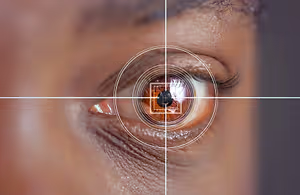
LASIK Changes How Light Focuses on the Retina
Laser-assisted in situ keratomileusis (LASIK) is a surgical procedure that reshapes the cornea to improve the way light focuses inside the eye.
It may be an option for certain patients with nearsightedness, farsightedness, or astigmatism. Results and suitability vary, and some patients may still need glasses for certain activities or as their vision changes with age.
Your Prescription and Eye Health Determine LASIK Suitability
A stable prescription and healthy corneas are important considerations before LASIK. Your age, medical history, corneal measurements, and existing eye conditions also influence whether surgery may be appropriate.
Dry eye deserves particular attention because LASIK can temporarily worsen dryness and may cause persistent symptoms in some patients. Other factors, including certain corneal conditions or prescriptions outside the recommended treatment range, may make another form of vision correction more suitable.
An evaluation helps identify concerns that need further assessment. Your LASIK surgeon makes the final decision about surgical eligibility.

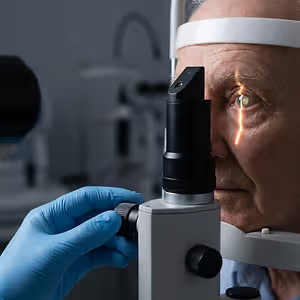
Your LASIK Care May Include Several Stages
Your eye care team reviews your prescription, eye health, and relevant medical history. Additional testing helps the surgeon determine whether LASIK is appropriate and plan the procedure.
Contact lens wearers may also need to stop wearing their lenses for a period before certain measurements. Your surgical team will provide instructions based on the type of lenses you wear.
Follow-up appointments allow your eye care providers to assess healing, monitor vision, and identify complications that may need attention.
Temporary dryness, fluctuating vision, glare, or halos can occur after LASIK. Your surgeon will explain what to expect during recovery, how to use prescribed medications, and which symptoms require prompt assessment.
LASIK changes your prescription, but it doesn't eliminate the need for future eye examinations.
Regular eye care remains important for monitoring conditions such as glaucoma, cataracts, and retinal disease, even when you no longer rely on glasses for distance vision.
Discuss LASIK with Your Austin Optometrist
An eye examination can help you understand how your eyes are doing now and which questions to bring to a refractive surgeon. We can walk through what a preoperative exam includes and what follow-up care can look like.
Call our eye clinic in Austin to ask whether we take part in LASIK co-management right now and what it would mean for your care.