

Specialty Contact Lenses in Austin, TX
Today's Vision Gateway offers specialty contact lens evaluations and fittings for patients with irregular corneas, complex prescriptions, or difficulty wearing conventional lenses.
Dr. Mark Chavana can assess your eye health and determine whether scleral or rigid gas permeable (RGP) contact lenses may be suitable for your vision needs.

Scleral Contact Lenses for Irregular Corneas & Certain Dry Eye Conditions
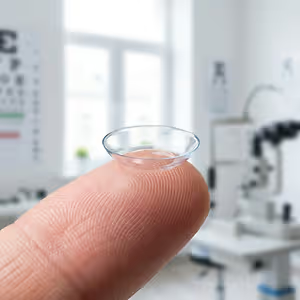
Scleral lenses are larger than standard contact lenses and rest on the white part of your eye rather than directly on the cornea. They create a fluid-filled space over the cornea that helps maintain moisture and provides a smooth surface for clearer vision.
This design can benefit some patients with keratoconus, irregular corneas, or significant dry eye conditions. Since the lenses don't rest directly on the cornea, they may also offer improved comfort for patients who have struggled with other contact lens types.
An evaluation can help determine whether scleral lenses are appropriate for your eyes and the vision difficulties you're experiencing.
Rigid Gas Permeable Lenses for Clear, Consistent Vision
Rigid gas permeable (RGP) lenses are made from firm materials that allow oxygen to reach your eyes. Unlike soft contact lenses, they maintain their shape during wear, which can provide sharper, more consistent vision for certain prescriptions.
RGP lenses may be helpful if you have astigmatism or a corneal irregularity that affects how clearly you see with soft contacts. They are generally smaller than scleral lenses and rest directly on the cornea.
These lenses can take time to get used to, particularly if you've only worn soft contacts. Dr. Mark Chavana can assess whether their design is right for your eyes.
Specialty Lens Fittings Account for the Shape of Your Eyes
Specialty contact lenses require precise measurements because your cornea's shape affects how a lens fits and performs. A standard lens may not provide stable vision or adequate comfort when the cornea is irregular.
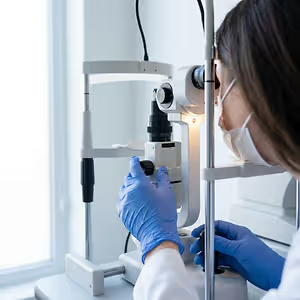
Dr. Mark Chavana will examine your eyes, review your prescription, and assess the fit of suitable lens designs. Trial lenses and adjustments may be necessary to achieve appropriate vision, comfort, and eye health.
The fitting process can take more than one appointment, depending on your prescription and how your eyes respond to the lenses.
Follow-Up Care Helps You Adjust to Your New Lenses
Your first fitting is only part of the process. Follow-up visits help your optometrist assess how the lenses fit during regular wear, check your eye health, and make adjustments when necessary.
Specialty lenses also have specific handling and cleaning requirements. Scleral lenses, for example, require appropriate filling and insertion techniques, while RGP lenses may take time to feel comfortable.
You'll receive instructions for your prescribed lenses, including how to clean, store, and handle them safely. Never expose contact lenses to tap water, and seek prompt attention for unusual redness, pain, or sudden vision changes.

Contact Lens Discomfort May Have More Than One Cause
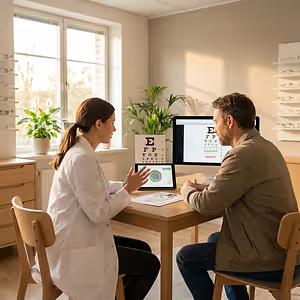
If contact lenses feel uncomfortable, move excessively, or leave your vision blurry, they may not be the right fit for your eyes. Dry eye, prescription changes, and an irregular corneal shape can all contribute to lens-wear problems.
A specialty contact lens evaluation can help identify possible reasons for these difficulties. In some cases, scleral or RGP lenses may be a worthwhile alternative.
Specialty lenses aren't suitable for every patient, but an eye examination can help establish which options may be appropriate.

Explore Specialty Contact Lenses at Today's Vision Gateway
An eye exam can help determine whether another design may provide clearer or more comfortable vision.
Contact our Gateway practice in Austin to arrange an evaluation with Dr. Mark Chavana.